How Grooved Rolls Improve Wire Straightening and Downstream Quality
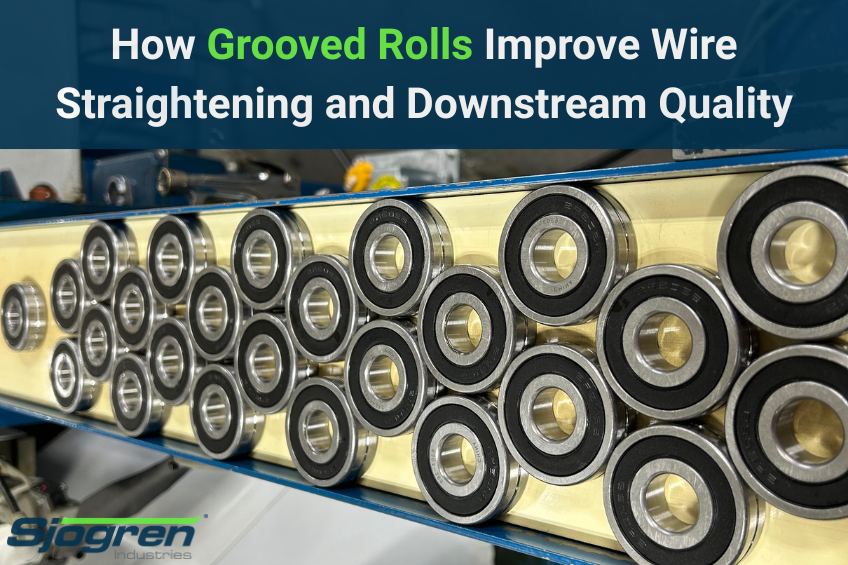
Wire quality doesn’t begin at the test bench or final inspection. It starts much earlier, at the first point where the material is guided, centered, and corrected as it moves through the line. That is why grooved rolls matter so much. They may look like a small part of the overall system, but they play a major role in how cleanly wire moves through wire straighteners and how consistently it behaves afterward.
When rolls match the material correctly, they help maintain centerline control, reduce marking, and keep the process steady from one stage to the next. When they are not, small alignment issues start to build. Those issues usually do not stay contained to one machine. They show up later in pulling, handling, and quality testing.
What We’ll Cover:
- What grooved rolls actually do in a straightener
- Why proper centering matters more than most operators realize
- The impact on wire pulling performance
- Surface quality, wear, and long-term line health
- How grooved rolls influence downstream testing
- Signs your grooved rolls are holding back your line
- Key takeaways
- Contact Sjogren Industries
What Grooved Rolls Actually Do in a Straightener
Inside a straightener, grooved rolls control how the wire is contacted and supported during correction. They do more than touch the material. They center it, guide it, and help distribute corrective force across the wire in a controlled way. That makes them one of the most important working parts inside wire straighteners.
The groove shape directly affects how the material behaves. A roll that matches the wire profile helps keep the contact area stable and the pressure even. A roll that is too loose, too tight, or simply the wrong shape can push the wire off center or create uneven correction from one plane to the next. That is when problems begin to show up.
In practical terms, the rolls decide whether the wire passes through the machine in a balanced path or leaves with leftover stress and inconsistency. Good straightening depends on that contact point being right every time.
Why Proper Centering Matters More Than Most Operators Realize
Centering is one of those details that does not get much attention when the line is running well. But when it slips, everything downstream feels it. Properly centered material moves through the straightener with more even correction and less surface damage. Poor centering creates uneven stress, inconsistent output, and a higher chance of marking or drift as the wire exits the machine.
This quality control is where the relationship between grooved rolls and a wire guide becomes important. The rolls help establish the centerline inside the machine, while the wire guide helps maintain a clean path before or after the correction. If either is off, the wire can move unpredictably, even if the rest of the equipment appears to be set correctly.
Operators often notice the symptoms before they trace the source. Output may look slightly inconsistent. The material may wander more than expected. But the root issue often comes down to how well the rolls keep the wire centered from the start.
The Impact on Wire Pulling Performance
Once the wire leaves the straightener, it carries the effects of whatever happened inside it. If the material exits centered and stable, wire pulling becomes much more predictable. If it exits with uneven correction or residual stress, the puller has to deal with that instability.
This is where upstream setup starts affecting downstream efficiency. Inconsistent alignment can cause subtle lateral movement during wire pulling, increasing grip variation, adding wear to contact points, and making force control less reliable. Those issues may not stop the line right away, but they add process noise and increase the risk of later downtime.
Properly fitted grooved rolls help reduce that risk by producing more balanced material before it reaches the next stage. The result is steadier pulling, less unnecessary strain on the equipment, and a process that stays under control longer. Good pulling performance does not begin at the puller. It begins at the straightener.
Looking for quality wire testing you can trust?
Learn MoreSurface Quality, Wear, and Long-Term Line Health
The condition and profile of the rolls also shape the condition of the wire itself. If the groove is wrong for the product, or if the roll has worn beyond its useful range, the contact can become harsh or uneven. That leads to marking, pressure points, and added wear on both the material and the machine.
This step is especially important in applications where finish quality matters. Coated materials, shaped wire, and specialty alloys leave little room for rough handling. A well-matched wire guide helps support the path, but it cannot correct contact damage that has already happened inside the straightener. That is why roll condition has to be part of long-term maintenance planning.
Healthy wire straighteners do not just straighten well. They protect the product while doing it. Good rolls reduce friction, help preserve finish quality, and cut down on wear that turns into rework, extra maintenance, or lost production time.
How Grooved Rolls Influence Downstream Testing
Many process issues do not become obvious until the material is tested. That is why upstream setup is so closely tied to downstream quality data. If the wire leaves the straightener with uneven stress, subtle marking, or inconsistent correction, those problems often appear later when the material is evaluated.
A bend tester is a good example. If wire has been overworked, marked, or pushed off center during straightening, the test can show inconsistent performance even when the base material itself is sound. The same is true if wire pulling has been unstable before the sample reaches inspection. The test does not create the issue. It simply exposes what the process already introduced.
Consistent straightening also supports downstream equipment such as cutters, forming systems, and a CNC wire bender machine, where material variation can affect finished-part geometry. That makes testing valuable for more than pass-or-fail decisions. It also helps point back to where the line may need attention. When bend-tester results start to drift, checking the rolls, guides, and pulling setup often reveals straightener output changing the test itself.
Signs Your Grooved Rolls Are Holding Back Your Line
In many cases, the line gives you warnings before a major problem develops. Output from the straightener may become less consistent. Pulling may feel less stable. Surface quality may begin to vary from run to run. Testing may show irregular results that are difficult to trace to the material alone.
When that happens, grooved rolls deserve a close look. Worn profiles, poor fit, or incorrect groove selection can all create problems that spread across the line. If a bend tester starts showing more variation than usual, or if operators notice more inconsistency coming out of the straightener, the rolls may be contributing more than anyone realizes.
The key is not to wait until the issue becomes expensive. Reviewing roll condition and fit early can help restore stability before the line loses more time, more material, or more confidence in its output.
Upgrade your wire tooling process today
Schedule a ConsultationKey Takeaways
- Grooved rolls do more than guide wire. They control how force is applied inside wire straighteners.
- Proper centering improves consistency and helps prevent surface damage from the start.
- A correctly placed roll can correct straightening problems, but it cannot fix poor roll contact after the fact.
- Better roll performance leads to more stable wire pulling and less wear on downstream equipment.
- Problems in straightening often show up later during quality checks on a bend tester.
- Small improvements at the roll level can lead to better output, better uptime, and better downstream quality.
Work With Sjogren Industries for Performance
Sjogren Industries builds grooved rolls for manufacturers who need accuracy, consistency, and long service life from their straightening equipment. Our rolls are made to fit virtually any assembly, can be customized for a wide range of shapes and materials, and are built to support better performance from your wire straighteners across the entire line.
If you are seeing variation in pulling, finish quality, or downstream testing, it may be time to look at the rolls doing the work. Sjogren can help you match the right profile to your process, improve alignment, and strengthen output without sacrificing the quality your customers expect. Contact us today or follow us on LinkedIn to request pricing and see how our updated grooved roll production improvements can bring more value to your operation.
Related Posts

| July 21, 2026
Accurate bend testing depends on more than the tester itself. The way operators guide, handle, and secure a sample before…
>
| June 16, 2026
In wire production, the equipment you rely on directly impacts performance, product quality, and profitability. Whether you're processing high-tensile materials,…
>
| May 26, 2026
Choosing the right straightening setup is about more than just wire diameter. It depends on how your line runs, how…
>