Bend Testing 101: How Guide Rollers and Wire Grips Protect Quality
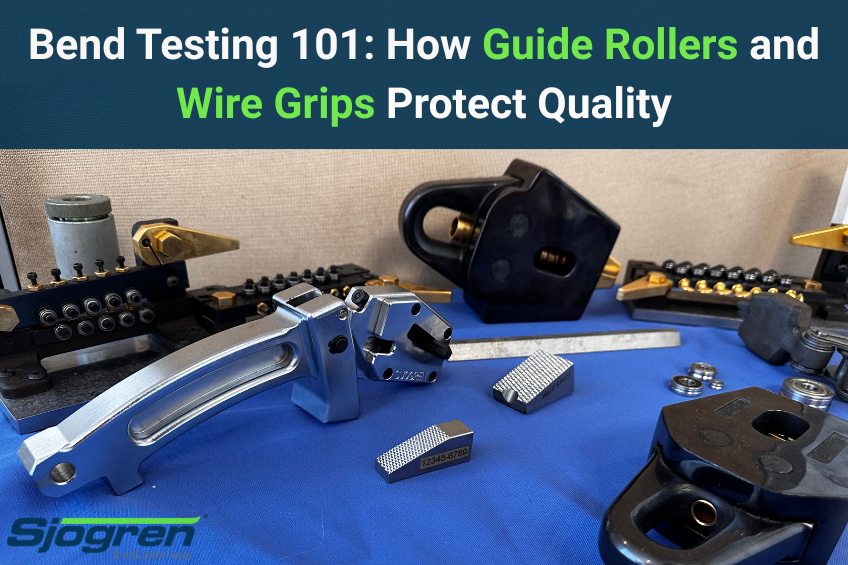
Accurate bend testing depends on more than the tester itself. The way operators guide, handle, and secure a sample before applying force can shape the final result. A damaged surface, uneven grip, or misaligned material path may cause a sample to crack early, even when the wire itself meets the required specifications.
A wire guide roller helps control the material path, while wire grips hold the sample securely during handling, preparation, or related testing. When both components work correctly, they protect the wire from avoidable damage and support more repeatable results. Better testing starts with better control before the sample reaches the test fixture.
What We’ll Cover:
- What bend testing reveals about wire quality
- How a wire guide roller controls the material path
- Why wire grips matter during sample handling
- How guiding and gripping problems affect bend test results
- Pre-test checklist for guides, grips, and samples
- Using test results to improve the wire process
- How Sjogren supports better handling and testing
- Key takeaways
- Contact Sjogren today
What Bend Testing Reveals About Wire Quality
Bend testing helps manufacturers evaluate how wire reacts to controlled flexing. Depending on the test method, it can reveal brittleness, limited ductility, coating separation, cracking, or weaknesses that may affect the material during production or its final application.
These tests give quality teams valuable information, but the results need context. A failure does not always mean the raw material has a defect. Poor preparation, surface scoring, incorrect alignment, or stress introduced during handling can also influence how a sample performs.
That is why operators should inspect the entire sample path before repeating a failed test or rejecting a material lot. The condition of the gripper wire, guiding equipment, grips, and test fixture may explain why two samples from the same coil produce different results.
How a Wire Guide Roller Controls the Material Path
A wire guide roller keeps material centered as it moves into a straightener, pulling station, test fixture, or other piece of equipment. The rolling contact helps reduce friction and supports a smoother path than uncontrolled sliding or manual feeding.
Proper guide positioning can reduce lateral movement, limit surface marking, and help the wire enter the next operation at a consistent angle. These benefits matter for any product, but they become especially important with coated wire, fine diameters, shaped materials, and products with strict surface requirements.
A worn, dirty, or misaligned guide roller can create small defects that operators may not notice right away. Buildup on the roll surface may scratch a coating. Incorrect positioning may force the sample to enter at an angle. Those issues can create weak points that later appear during testing, forming, or pulling.
Why Wire Grips Matter During Sample Handling
Wire grips help operators hold, position, or pull material without allowing unwanted movement. The grip must transfer force securely while protecting the sample from excessive marking, flattening, or distortion.
Grip performance depends on several factors, including jaw geometry, tooth pattern, wire diameter, material strength, and surface condition. A grip that works well for heavy, uncoated wire may damage a fine or coated product. Using more force cannot correct a poor match between the grip and the material. It often makes the problem worse.
For gripper wire applications, operators should choose jaws and grips that provide enough contact to prevent slipping without crushing or scoring the sample. They should also inspect grip surfaces regularly. Worn teeth, uneven jaws, and debris can change how the grip holds the material and create inconsistent results from one sample to the next.
Looking for quality wire testing you can trust?
Learn MoreHow Guiding and Gripping Problems Affect Bend Test Results
Guiding and gripping problems often compound. A misaligned guide roller may send the wire into the next operation at an angle. The wire grips may then hold the sample unevenly, placing more pressure on one side than the other.
During bend testing, that uneven stress may cause early cracking, coating separation, or premature fracture. Operators may assume the wire failed because of poor material quality, even though the problem started during sample handling.
Common warning signs include repeatable surface scores, flattened contact areas, uneven bends, cracks near a grip line, and different results across samples from the same lot. These patterns deserve attention. They often reveal that the test setup or material path needs correction.
Bend testing and torsion testing should measure how the wire behaves under controlled conditions. It should not measure damage introduced by worn components or poor alignment. Reviewing guides and grips helps keep those outside variables from distorting the result.
A Pre-Test Checklist for Guides, Grips, and Samples
A short inspection before each test can prevent retesting, wasted samples, and unnecessary troubleshooting.
- Inspect the wire guide roller for wear, buildup, chips, or surface damage.
- Confirm that the guide matches the wire’s diameter, shape, and surface requirements.
- Check that the sample follows a centered path without rubbing against nearby components.
- Inspect wire grips for worn teeth, uneven jaw faces, loose components, or debris.
- Match the grip style and jaw pattern to the material and expected force.
- Examine the gripper wire for scratches, flattening, coating damage, or previous grip marks.
- Clean the sample and remove burrs from cut ends.
- Confirm that the sample and test fixture share the same centerline.
- Record guide positions, grip selection, and sample conditions for repeatability.
This review takes less time than investigating inconsistent results after a full test series. It also gives operators a clear baseline when something changes.
Using Test Results to Improve the Wire Process
Manufacturers should treat bend testing results as process feedback, not just pass-or-fail data. When results vary unexpectedly, operators should review the sample condition, grip setup, guide alignment, and upstream handling process before changing the test procedure.
Repeated scratches in the same location may point to a damaged guide roller. Fractures near the grip line may indicate worn jaws, excessive pressure, or a grip that does not match the material. Uneven bends may trace back to an off-center sample path.
Documenting these patterns helps teams identify the source of the problem faster. Correcting the handling issue before testing more samples can reduce scrap and improve confidence in the final data.
Upgrade your wire tooling process today
Schedule a ConsultationHow Sjogren Supports Better Handling and Testing
Sjogren Industries supports wire manufacturers with guiding, gripping, handling, and testing equipment built for demanding production environments. Our product lineup includes adjustable wire guides, inlet guide roller boxes, pulling equipment, replacement grip components, and testing systems for evaluating wire performance.
Sjogren can help manufacturers select a wire guide roller, wire grips, or testing equipment based on wire diameter, shape, material strength, surface requirements, and production needs. We also support custom applications and replacement components for existing assemblies.
The right solution depends on where the damage or inconsistency enters the process. Sjogren helps customers review the full material path so they can correct the source of the issue rather than repeatedly treating the symptom.
Key Takeaways
- Accurate bend testing starts with proper sample preparation, guiding, and handling.
- A wire guide roller helps center material and protect its surface before testing.
- A worn or misaligned guide roller can introduce stress points that affect test results.
- Properly matched wire grips hold samples securely without adding unnecessary damage.
- Operators should inspect gripper wire, guides, grips, and fixtures before each test.
- Reviewing the full material path helps separate handling problems from actual material defects.
Work With Sjogren Industries to Protect Your Wire Quality
Reliable testing starts with controlled material movement and dependable contact points. Sjogren Industries helps wire manufacturers improve both with proven guiding, gripping, handling, and testing solutions.
Whether you need a new wire guide roller, replacement wire grips, bend testing equipment, or support for a recurring quality issue, our team can help you identify the right solution for your process. Contact Sjogren Industries to strengthen sample preparation, improve testing consistency, and protect wire quality from the start.
Related Posts

| June 16, 2026
In wire production, the equipment you rely on directly impacts performance, product quality, and profitability. Whether you're processing high-tensile materials,…
>
| May 26, 2026
Choosing the right straightening setup is about more than just wire diameter. It depends on how your line runs, how…
>
| April 22, 2026
Small material issues rarely stay small once production begins. A flaw that goes unnoticed at the start of a run…
>